

Every VIM physician practices Health Management Medicine.
Whoever you work with, the core is the same: a comprehensive baseline, a living plan, your capacity tracked as a vital sign, and a physician who knows your priorities as well as your physiology.
You choose one physician, but you get the thinking of all of them. VIM's doctors practice as a consortium, comparing notes and sharpening each other's judgment, so your plan carries the expertise of the whole group.
What differs is the individual. So choosing care at VIM is two steps: first the model, then the physician who fits you. Here’s Melissa’s way:
Stanford. Brigham & Women's. Mass General.
- Board-certified in Gastroenterology; Diplomate, American Board of Internal Medicine
- Doctor of Medicine, Stanford University School of Medicine
- Internal medicine and primary care residency & Gastroenterology fellowship, Brigham and Women's Hospital
- Master of Public Health in Clinical Effectiveness, Harvard T.H. Chan School of Public Health
- Chief of Gastroenterology, Mass General Brigham Salem Hospital. 17 years in community practice
- 24 years in internal medicine and gastroenterology, caring for patients across the full range of digestive and liver disease
- Teacher, mentor, and coach to MGB Internal Medicine Residents
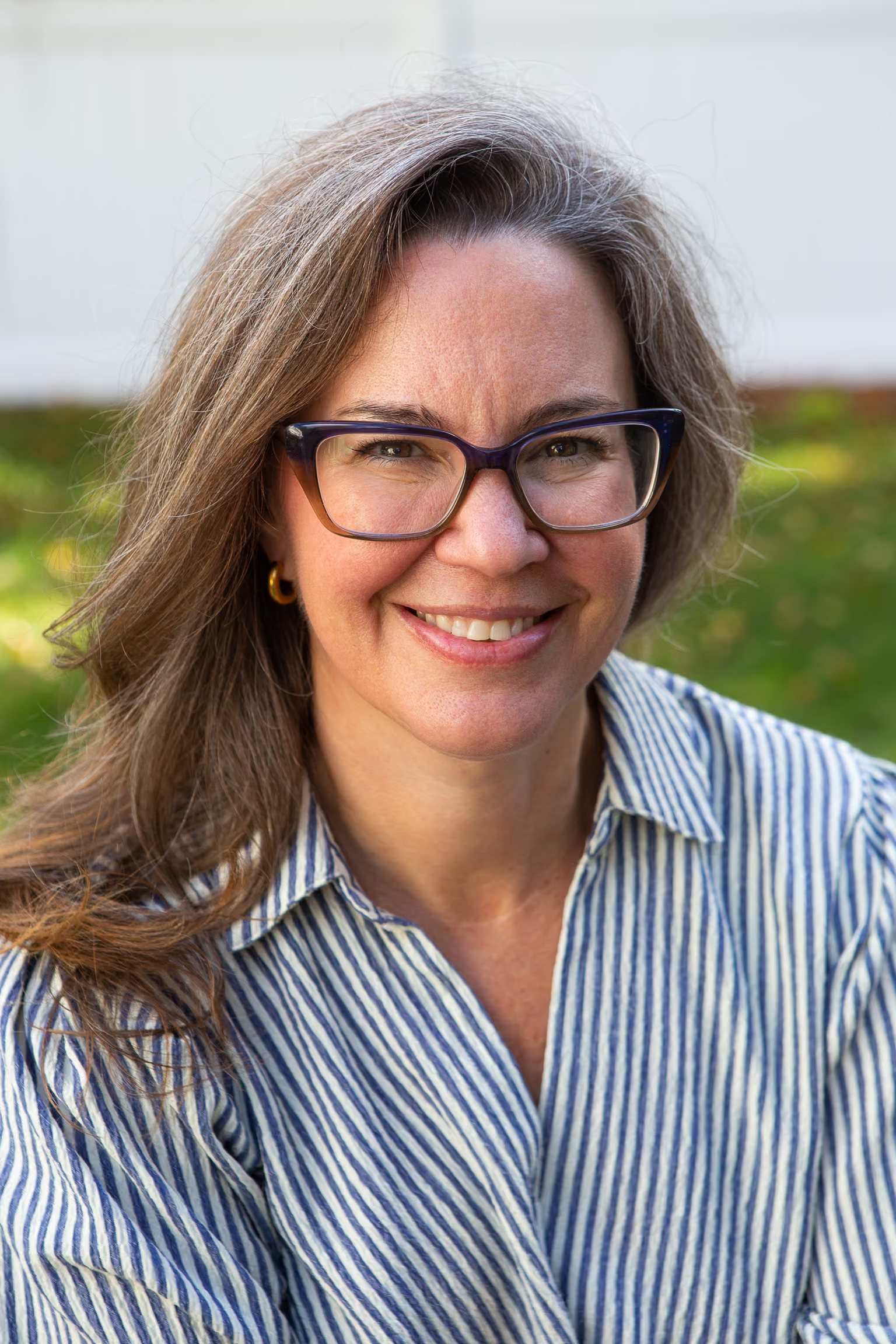
A letter from Melissa
I love being a doctor. What has always mattered most to me is being invited into people's lives at moments when they are most vulnerable—to listen, to understand what matters most, to earn trust, and to help chart a path forward. I am equally drawn to the intellectual rigor of medicine: understanding how the human body works, asking why something is happening, and continually learning as medicine evolves. After decades of caring for patients from early adulthood and throughout the arc of aging, I have come to believe that neither is enough without the other. Knowing the medicine and knowing the person are inseparable.
Training and practicing in both primary care and gastroenterology has shaped how I see my patients. Primary care taught me to see the whole person and their health over time; gastroenterology taught me to look deeply when a problem requires it. Those perspectives continually inform one another. And whether I am treating a specific disease or thinking about long-term health, I come back to the same foundations: nutrition, movement, sleep, and meaningful relationships–all are essential to how we build and preserve health over a lifetime.
My own experiences with menopause, cancer, and osteoporosis made the importance of long-term health deeply personal. Caring for my mother through six years of dementia brought it into even sharper focus. I have long understood that health is shaped over decades, often long before disease becomes apparent, but these experiences gave new urgency to something I had always believed: it is possible to shape our health. That belief has become even more central to how I care for patients.
I refuse to let a diagnosis become the whole story. Disease deserves our attention and the best medicine we can bring to it, but it should not define the person or limit what health can still mean for them. My role is not only to prevent and treat disease, but to help my patients understand their health, recognize where they have agency, and continue to build and preserve health in every way they can. I bring medical knowledge and judgment to that work, but it is work we do together.
VIM is a natural evolution of how I have always approached medicine—grounded in science and curiosity, built on relationships, and focused on the whole person. At the heart of that approach is a simple belief: I want to know my patients deeply, help them understand and shape their health over time, and never let a diagnosis define what health—or life—can still look like for them.
And the question I want to keep asking is: What do you need from your health to live the life you want?
— Melissa.




Whole-person care with specialist depth
A diagnosis may be part of your health, but it should never become all of your health. I work with patients of all ages to focus on building healthspan—staying healthy, active, and independent throughout life. I coordinate care across specialties and different care settings, from the hospital and outpatient clinic to assisted living, so that your care fits together and supports your long-term health and goals.

Health with specialist perspective
Patients with IBD, IBS, fatty liver disease, cirrhosis, and other GI conditions may be drawn to my practice because of my gastroenterology background, but their care doesn't stop with their diagnosis. I bring a specialist's perspective to primary care, working alongside their gastroenterologist or other specialists when needed to make sure their care fits into their broader health needs and goals.

Women's health through life's transition
Perimenopause and menopause deserve attention not only for the symptoms they cause today, but for how they may affect health over time. I look across cardiovascular, metabolic, bone, and muscle health as a woman's needs and priorities change, with the fundamental goal of helping her stay strong, independent, and active throughout life.

The reasoning, not just the recommendation
I want you to understand why I recommend something, not simply what I recommend. I explain what the evidence supports, where uncertainty exists, and what your options are so we can make informed decisions together.
Melissa might be your health manager if…
- You've been told everything looks normal, and you still don't feel well. You want a physician who treats that as a starting point worth investigating rather than a conversation that's finished.
- You're managing something ongoing. IBD, IBS, fatty liver, or cirrhosis and other chronic diseases are lived with daily and reviewed occasionally. You want the reverse: care that's continuous, and integrated with nutrition, sleep, cardiovascular health, and movement treated as part of the plan.
- You're in a transition and want it taken seriously. The postpartum years, the perimenopause and menopause transition. You want someone who investigates symptoms instead of waiting for them to pass.
- You don't entirely know what to ask for yet. You don't need to arrive with a protocol or a reading list. You need to understand what your options actually are, and Melissa would rather teach you that than hand you a plan.